Wednesday, 29 September 2010

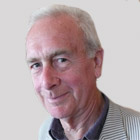
Lord Patten: 'a visit to remember'

In an interview with the Rome-based news agency Zenit, the government representative who oversaw Benedict XVI's Sept. 16-19 journey to the United Kingdom says Pope Benedixt XVI's visit was a "huge success" and a "triumph."
"His four days with us in September were a triumph for His Holiness, for the Catholic Church and its partner Christian denominations, for other faith groups in our country and for all those from civil servants to police officers who helped to organize his visit," he said.
Lord Patten spoke of the "huge and enthusiastic crowds of well-wishers, Catholic and non-Catholic alike" who greeted the Pope.

"I will long remember the crowds in Edinburgh when he arrived, the throng along the Mall in London on his way to the Hyde Park prayer vigil and the mix of worshippers -- young, old, and from every race and class -- on all the pastoral occasions," he said.

Citing the role of Catholic education in the country and the government's partnership with the Church on certain issues, Lord Patten said that the visit "reminded us, in case we had forgotten, the role that faith groups play in our domestic life."

He affirmed that the Pope was "clearly impressed by the evidence that the Christian legacy is -- in his own words -- 'strong and still alive in every level of social life' in Britain."

Lord Patten called the Pope's series of speeches and homilies "remarkable," and said that he "challenged us all to observe the relationship between reason and religion and the importance of establishing an ethical foundation for political action and policy making in the public arena. Success is not just about advances in consumerism."

The government official made particular reference to the Pope's speech to representatives of British society at Westminster Hall. He said this address "will have a substantial impact on public debate for many years to come."

"So Pope Benedict’s stay with us was in the most profound sense a visit to remember," Lord Patten concluded. "Some of its lessons and messages will reverberate down the years.”

Westminster priest vocations on rise since 2005

There are 46 men studying for the Catholic priesthood at London’s Allen Hall seminary, according to figures put out today by Westminster Diocese. Eleven of them have just started. Of the 46, 33 are preparing for the priesthood for the Diocese of Westminster; three more are studying for Westminster diocesan priesthood at Vallodolid, Spain; one is at the Beda College in Rome;  and another is at the Venerable English College in Rome.

Between 2002 and 2005, numbers of men training for the priesthood at Allen Hall were never more than 34. In 2006, there were 37; in 2007, 40; 2008. 43; 2009, 45; and this year, 46. 

Pope 'ranks 6th in world influence'

In its ranking of the "50 people who matter today", the left-wing weekly puts Pope Benedict at No. 6, up from 26. Before "Papa Ratzi", as the magazine calls him, come the Murdochs, Barack Obama, Mahmoud Ahmadinejad and Steve Jobs. The brief, sneering text focuses exclusively on sex abuse cover-ups and the alleged "financial power" of the Vatican. In describing Pope Benedict's UK visit, the magazine mentions only the "reaction" to it, which demonstrates, says the NS, "the divisive but enduring impact of the pontiff today".

By publishing a front-cover article by Geoffrey Robertson in the week of the papal visit, the NS showed itself to be, along with the Independent, the mouthpiece of British secularism. The Independent has since come close to admitting it got the Pope badly wrong. No such humble recognition from the NS.

Philip Lawler on Pope's disarming radicalism

The director of the Catholic Culture project explains the paradoxes of the papal visit.

Throughout the trip, Pope Benedict was quietly, humbly, but persistently staking a claim. He was not coming to Britain as a visitor from outside, hoping to be welcomed by the nation's leaders. He was claiming, as St. Peter's successor, to be the rightful moral leader of this old Christian society. He was inviting Britain to end its 400-year flirtation with Protestantism and reclaim its Catholic heritage. He was promising that a nation founded on the truths of the Catholic faith could be a prosperous, pluralistic, and successful modern society.

The Pope was making an astonishingly bold series of claims, really. He made them with disarming humility, so that his audiences did not take offense. Still the challenges were unmistakable. Now with the Pope back in Rome, a stunned British society has time to digest the papal message, to realize the implications of what he said, to sit up and think.

Stuart Reid: 'Valero right on media bias'

Catholic Herald columnist Stuart Reid agrees with Jack Valero that there is no "institutional anti-Catholic bias" in the media. The counter-protest website 'Protect the Pope' had earlier criticised Valero for his remarks to Zenit. Responding crossly to Reid, Protect the Pope reveals something of itself:

I apologise for not meeting Stuart Reid’s high journalistic  standards for nuance, irony and scepticism but its been enough of a challenge trying to keep up with the deluge of anti-Catholic attacks in the media over the past two months.  This is a one-man operation, balanced between my other responsibilities as a deacon in the Diocese of Lancaster.
For its part, Catholic Voices salutes the Rev Nick Donnelly for his tireless work and many useful posts.

It helps, in any discussion about the so-called "anti-Catholic bias" of the media, to distinguish between the latent ignorance of and hostility to the Church in wider society, and the media itself; naturally, the latter will reflect the former -- not in the sense of reproducing the ignorance, but in asking the Church to confront those criticisms. That's why the media can look anti-Catholic.

Tuesday, 28 September 2010

Blair on the media: is this what happened with clerical sex abuse?

Tony Blair's memoir is almost entirely devoid of any reference to his Catholic faith. But it contains some very interesting analyses, not least of contemporary media mechanics. Monitor is struck by the following passage on how the media generates a "scandal": is this what has happened with clerical sex abuse?

Then, in April, there was Charles Clarke and the foreign offenders who on completion of their sentence should have been deported and removed from the country and weren't. This was serious, but Charles made the mistake of trying to be too open too early, when the full facts could not be known -- the problem, as with many such things, had existed for a long time, well before we came to power -- and he suffered a mauling with bad consequences for me, him, and the government.

As with any such issue, what happens is that the spotlight suddenly shines in a corner that has lain dark for ages. That's fair enough; but what then occurs is that a complete ex post facto attitude is imposed on it, so that you end up with a ludicrously exaggerated sense of wrongdoing. So when the foreign offenders' 'scandal' is uncovered, it leads the news and this is perfectly sensible; but then because the media focus is so intense, every detail becomes another headline as if the politician in charge, in this case Charles, has literally been doing nothing else for months on end and is therefore incompetent in not having sorted it all. Then, for sure, someone pops up and says: Ooh, I warned them all about this (usually in paragraph 193 of some memo) and then the frenzy develops into hysteria.

Anyway, you have to go through it, and by the end I became quite deft at dealing with these kinds of furore. Basically you have to get on top of the detail quick, and then grind people down with fact, context, rebuttal, explanation and the art of blinding with science.

'The politics of atheism'

Writing for the Australian ABC 'Religion and Ethics' site, Professor John Milbank, one of the leading exponents of Catholic social thought in the UK, ponders the rise of atheism in the politics of the Left.

Marxism was the first current within socialism to think of economics in entirely materialist terms and so to regard capitalism as a necessary phase of development. The Chinese Communist Party is witness to how easy it is for this to mutate into the idea of the final necessity of Capitalism after all.

But pre-Marxist socialism was mostly religious, and the Labour Party up until recently continued this legacy. Sometimes we think of religious and moral socialism as the "soft option."

But to the contrary, it was this legacy - inspired by Methodism, Anglicanism and Catholicism, and not by hyper-Augustinianism - which seriously hoped to render all economic practice moral. It sought a just distribution in the first place, and, prior to Anthony Crosland's revisionism in the late 1950's, not just an ameliorative "redistribution" that was entirely predicated upon the promoting of capitalist growth.

The truth is that the differences between social democracy and neo-liberalism are in the end trivial, and that both sides have covertly to borrow from each other. This is because the worst ravages of an amoral market have to be plastered over by the State, but in the end the main game for either ideology is producing 'wealth' that is defined indifferently to questions of true human flourishing.

It is for this reason that a secular Labour Party today tends to abandon its critique of a market where things and money dominate people ('capitalism' if you like) and defines itself instead as against all tradition and in favour of unfettered personal choice.

A programmatic atheism is at work in the growing hostility to the Crown, to the House of Lords (which needs reform, not total mutation into a second House of Commons which would likely be a less radical body), to the Churches, to the family and to group-rights, and in favour of foxes, exclusively metropolitan life-styles and absolute value-pluralism.

Indeed, it can sometimes appear that for sections of today's Left, as for past totalitarianisms, a naturalistic atheism is the main program. This is why political categorisation is increasingly made in terms of attitudes to sexual issues, to traditional cultures and to religious belief, rather than to issues of substantive economic justice. 'Culture wars' have come to displace older debates about just distribution.

But the evidence of history is that the politics of atheism drifts towards a nihilism of the rule of power alone. The evidence is equally that advocacy of the sovereign power of the individual soon gives way in practice to the absolute power of the amoral market and of the sovereign State whose only purpose is itself.

In the face of this drift of the Left towards secularism and away from radicalism, there is today a remarkable counter-tendency that is a real source of hope. This is a new tendency of religious bodies, and especially of the Catholic Church, in despair at the nihilistic drift of secular politics, more directly to articulate and enact its own political views, often outside current conventions of what counts as Right or Left.

These views, as exampled by Benedict's encyclical Caritas in Veritate, refusal to be resigned to the notion that there is any aspect of human life where justice cannot be implemented.