Showing posts with label Austen Ivereigh. Show all posts

Monday, 27 September 2010

Labour must learn again to 'do God'

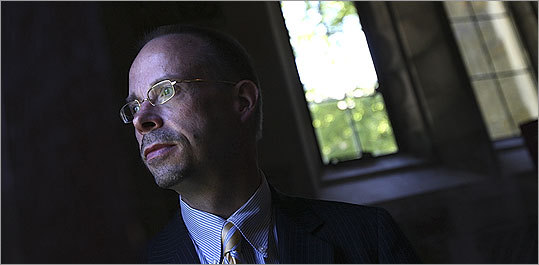
CV coordinator Austen Ivereigh in the Guardian's 'Comment is Free' argues that Labour under Ed Miliband (photo) now needs to recover some of Tony Blair's ability to tune into the concerns of  churches, lost under Gordon Brown.
Most people are not in churches and mosques. But millions are. And in political terms those millions are dynamite. Fired by strong values, believers in a better world, members of organisations built on strong bonds of trust, and willing to turn out to demonstrate and build power – churches were, and for Labour can be again, potent sources of political renewal. True, there are plenty of secular people with ideals, but they are less organised; or, if they are organised, they tend to know better what they oppose than what they stand for. Contrast the 10,000 who protested Pope Benedict with the 200,000 lining Whitehall to welcome him.

Ed-led Labour needs to know that you can't have the fruits without the roots. If what the party must now do is galvanise people where they gather – and especially where those who gather are hardest hit by joblessness and cuts – it must first remove the single biggest obstacle in the way of the party reconnecting with communities: its dogmatic, sneering secularism.

Tuesday, 21 September 2010

Guardian wrap-up from Cofton Park


CV coordinator Austen Ivereigh joins Stephen Bates (photo) for a Guardian podcast wrap-up from Cofton Park. Listen here from 17:50.

Sunday, 19 September 2010

National Catholic Reporter on Catholic Voices

Veteran Vatican-watcher John Allen interviews CV coordinator Austen Ivereigh on Catholic Voices.

Friday, 17 September 2010

CNS on Catholic Voices

The news service of the US bishops' conference, Catholic News Service, on Catholic Voices, written by its highly-respected Rome correspondent, Cindy Wooden:

During Pope Benedict XVI's visit to Great Britain, it was difficult to turn on the television without seeing a youngish, articulate lay Catholic defending church teaching.

          Although members of the pool of 21 speakers have studied the church's position on hot-button issues and have been trained in the art of keeping a cool head under the fire of a revved-up interviewer, the church defenders are all volunteers.

          The men and women -- including a lawyer, teachers, a full-time mom and one priest -- are the frontline of an organization called "Catholic Voices," which was founded in February.

          With a budget of about $78,000, the group's three coordinators recruited and trained the 21 speakers, bringing in experts to speak about church teaching on topics ranging from homosexuality to the ordination of women and hiring a studio and professional television interviewers so the speakers could hone their skills.

          Poppy MacDonald, a 24-year-old commodities buyer for an aerospace company, said the training was "massively helpful."

          As part of her tryout for the team, she was given a test question about Catholic teaching on AIDS and condoms and, after reading and preparing, she said, "I tried to say as much as possible. But then in the training, they help you see that you need to focus on the three things you want to get across" rather than racing the clock to say as much as possible about a subject.

          While some have referred to Catholic Voices as "Catholic spin doctors," MacDonald said, "We're not trying to put any spin on what the church teaches."

          "We don't go on the air preaching chapter and verse from the catechism or the Bible, but we try to challenge or correct misunderstandings about church teaching," she said.

          The training, she said, was "a wonderful opportunity to learn how to speak about your faith in a way that's accessible."

          Austen Ivereigh, one of the founders and coordinators of the group, said the 21 speakers would give similar answers to questions about the key controversial issues since they all attended the same briefings, "but they haven't been programmed, so the responses depend on them first of all."

          Catholic Voices, which does not speak for the church officially, chose as team members only involved Catholics who accept church teaching, because with the approach of the papal visit "we didn't have time for debates," Ivereigh said.

          "The lovely, lovely thing is the generosity" of the speakers who gave up their free time twice a month for training sessions, and who basically lived out of the papal visit press center while Pope Benedict was in Great Britain Sept. 16-19.

          The members of Catholic Voices, he said, were "all frustrated by how the church was being presented in the media" before the papal visit.

          Ivereigh and MacDonald said much of the bad coverage seemed to be the result of simple ignorance about what the church really teaches on a given subject.

          The speakers may face a hostile grilling when they speak, but a key part of the training is to respond calmly with the truth, Ivereigh said.

          "When you are up against harsh criticism, the critic usually has a value to defend and often it's a shared value," he said, like when someone attacks the church's teaching on the all-male priesthood, emphasizing the dignity of women. The church teaches that its practice is based on the example of Jesus, who chose only men as his disciples, and does not imply less respect for women.

          "Often the confusion arises because the church has put it across badly," Ivereigh said.

Monday, 6 September 2010

The case against Geoffrey Robertson

Over at America magazine, CV coordinator Austen Ivereigh challenges Robertson's wild claims.

Sunday, 5 September 2010

Freedom of religion 'vital for civil society'

Catholic Voices coordinator Austen Ivereigh (pictured, speaking at last week's Protest the Pope debate) told John Humphrys on Saturday's BBC R4 Today programme that in recent years the Government had failed properly to balance equality legislation with the freedom of religion which was crucial for a vigorous civil society. Hear the interview here.